Tuesday, June 4, 2013

Pants Used To Be A Bad Word In England

Although seldom found in print, swear words or taboo words were undoubtedly
uttered just as profusely in the streets as they are now. In polite or mixed
company, of course, euphemisms were used, especially by women and children. Many connotations of words used today remain curiously unchanged from the nineteenth century to the twentieth. In cases where no definition appears, the reader can use his or her imagination and extrapolate from current usage.

For example the he word pants was not spoken of aloud in polite circles, especially during the
first half of the century. Acceptable alternatives: inexpressibles,
unmentionables, nether garments, and sit-down-upons.

Source: Authentic Campainer Website

Monday, June 3, 2013

This Is The Tallest Man Ever

Robert Pershing Wadlow (February 22, 1918 – July 15, 1940) is the tallest person in history for whom there is irrefutable evidence. Wadlow is sometimes known as the Alton Giant or Giant of Illinois because he was born and grew up in Alton, Illinois.

Wadlow reached 8 ft 11.1 in (2.72 m) in height and weighed 439 lb (199 kg) at his death at age 22. His great size and his continued growth in adulthood were due to hyperplasia of his pituitary gland, which results in an abnormally high level of human growth hormone. He showed no indication of an end to his growth even at the time of his death.

Sunday, June 2, 2013

Smart Bed: The Bed That Can Make Itself

The simple act of making a bed is, for most of us, the first chore of each day.

Now the relentless march of technology threatens to bring to an end even this most straightforward of domestic tasks.

Spanish firm OHEA has unveiled its Smart Bed, an electronic bed that makes itself.

In just 50 seconds two mechanical arms, one on each side and each equipped with a roller, carry the blanket back to the head of the bed.

As it approaches, the pillows are lifted on two shelves allowing the blanket to neatly slot in underneath.

They are then lowered and the bed looks neat and is completely made.

What is more, the owner does not even have to remember to turn the device on.

A switch at the foot of the bed provides manual and automatic settings.

Flipped to automatic, the bed can sense when somebody has just got up and starts making itself three seconds later.

A built-in safety device ensures that it cannot operate when there is a person lying on the mattress.

Furniture maker OHEA has not yet set a price or release date for the Smart Bed, although it is listed as 'coming soon'.

While a seemingly ideal device for those who hate making their bed every morning, the Smart Bed appears less-than-perfect for those who like to fluff and turnover their pillows.

Source: Daily Mail


Saturday, June 1, 2013

Water Flow Can Be Used To Cut Metal

A waterjet is a tool used in machine shops to cut metal parts with a (very) high-pressure stream of water. As amazing as it sounds, if you get water flowing fast enough it can actually cut metal.

Think of a waterjet as something with about 30 times the pressure of the power washer wand at your local car wash. Power washing at car washes is an everyday example of a dirt film being "cut" off the body, wheels and tires of an automobile.

The key to cutting metal with water is to keep the spray coherent. Waterjets are able to cut because the spray is channeled through a very narrow jeweled nozzle at a very high pressure to keep the spray coherent. Unlike metal cutters, a waterjet never gets dull and it cannot overheat.

Low pressure waterjets were first used for mining gold in California in 1852. Steam and hot water jets were used in the early 1900s for cleaning. High pressure waterjets were used for mining in the 1960s, and about 10 years ago industry began using waterjets for cutting. Abrasive water jets (abrasivejets) were first used in industry in about 1980.

In the past, only one piece of metal could be cut at a time with a saw or other metal cutting mechanical process. It was time intensive and expensive. Computer-controlled waterjet and abrasivejet cutting are used today in industry to cut many soft and hard materials. The plain water-abrasive mixture leaves the nozzle at more than 900 mph. The latest machines can cut to within two thousandths of an inch, and have jet speeds around Mach 3.

Waterjets can cut:
  • Marble
  • Granite
  • Stone
  • Metal
  • Plastic
  • Wood
  • Stainless steel
A water jet can cut a "sandwich" of different materials up to four inches thick. This odorless, dust-free and relatively heat-free process can also cut something as thin as five thousandths of an inch.

The tiny jet stream permits the first cut to also be the final finished surface. This single cutting process saves material costs and machining costs. For example, the engineer merely gives a gear drawing to the cutting shop via a diskette or e-mail and gets the finished gear back.

Waterjets cut softer materials, while abrasive jets are used for harder materials. The actual cutting is often done under water to reduce splash and noise. Faster feed rates are used to prevent the jet from cutting all the way through.

The water pressure is typically between 20,000 and 55,000 pounds per square inch (PSI). The water is forced through a 0.010" to 0.015" in diameter orifice (hole) in a jewel.

A waterjet can remove the bark from a tree at a distance of 40 feet if one alters the chemistry of plain water by adding SUPER-WATER®, available from Berkeley Chemical Research. The SUPER-WATER® is a soluble polymeric chemical that acts like a series of molecular spinal columns or concrete reinforcement bars that tie the individual water molecules together in a more structured way to form a coherent jet. Imagine the potential for cutting down roadside weeds.

Source: HowStuffWorks

Friday, May 31, 2013

This Fridge Opens Only If You Smile

This fridge opens only if you smile!

Noting that smiling improves the quality of life, Japanese scientists has developed a new gadget that facilitates smile.

In fact, this refrigerator is equipped with a camera that can detect not only faces, but also smiles, and it will not open until you show it your most beautiful smile.

Even though I’m not sure that forced smile facing a fridge is the best effect on quality of life, in any case it works.


Thursday, May 30, 2013

Wednesday, May 29, 2013

A Man Who Donated Blood Over 1000 Times

James Harrison, OAM, also known as the Man with the golden arm, is a blood plasma donor from Australia. His over 1000 donations throughout his lifetime have saved over two million unborn babies from Rhesus disease.

James Harrison was born in 1936. At the age of 13, he underwent a major chest surgery to extract a lung with metastasised pneumonia, and required 12 litres of blood. After surgery, he was in the hospital for three months. Realising the blood had saved his life, he made a pledge to start donating blood as soon as he turned eighteen, the then required age.

Mr. Harrison started donating in 1954 and after the first few donations it was discovered that his blood contained an abnormally strong and persistent antibody called Rho(D) Immune Globulin. Rho(D) IG is given to Rh(D) negative mothers of unknown or Rh(D) positive babies during and after pregnancy which prevents her from creating antibodies to the blood of a Rh(D) positive child. This antigen sensitization and subsequent incompatibility phenomenon is called Rhesus disease, a form of the hemolytic disease of the newborn (HDN).

Through the donations of his plasma, Mr. Harrison helped prevent thousands of born and unborn children from dying of HDN. This uniqueness was considered so important, that his life was insured for one million dollars after this discovery and the following research based on his donations created the commercial Anti-D immune globulin commonly known as RhoGAM. His blood plasma derivatives has since been given as treatment to one in ten pregnant women whose blood is not compatible with that of their children.

As blood plasma, in contrast to blood, can be donated as often as every 2–3 weeks, he was able to reach his 1000th donation in May 2011. This results in an average of one donation every three weeks during 57 years. Commenting his then record number:
I could say it's the only record that I hope is broken, because if they do, they have donated a thousand donations.
—James Harrison.
His donations were estimated to have helped to save over 2.4 million babies with pregnant women being treated with his antibodies, including his own daughter Tracey.

Harrison has received an Order of Australia medal (OAM). He was nominated for Australian of the Year, though he did not win. In 2011, he was nominated in the New South Wales Local Hero division of the Australian of the Year awards.


Tuesday, May 28, 2013

Hug a Vending Machine, Get Free Coke

The pop up Coca-Cola Hug Machines, emblazoned with ‘Hug Me’ were an instant success on social media in Singapore, with people snapping themselves hugging the machine and being rewarded with a free can of Coke. Leonardo O’Grady, ASEAN IMC Director at The Coca-Cola Company noted that the “reaction was amazing - at one point we had four to five people hugging the machine at the same time as well as each other! In fact, there was a long line of people looking to give hugs”

Whilst we enjoy the warm, fuzzy message of encouraging hugs in public, the ‘The Cola-Cola Hug Machine’ is also a cunning marketing ploy from ad firm Ogilvy & Mather. The machines, are part of Coca Cola’s global ‘Spread Happiness’ campaign, which encourages consumers to “bring positivity, optimism and fun into their lives” and to “open a Coke and share a little happiness”.

The hug machines have been such a huge success, there are now plans to roll it out across Asia – no word as yet as to whether the UK will get a free coke dispenser of their own. With many members of Stylist HQ suffering from a severe Diet Coke addiction, you might have to prise those machines from our Kung Fu grip.

Source: stylist.co.uk

Monday, May 27, 2013

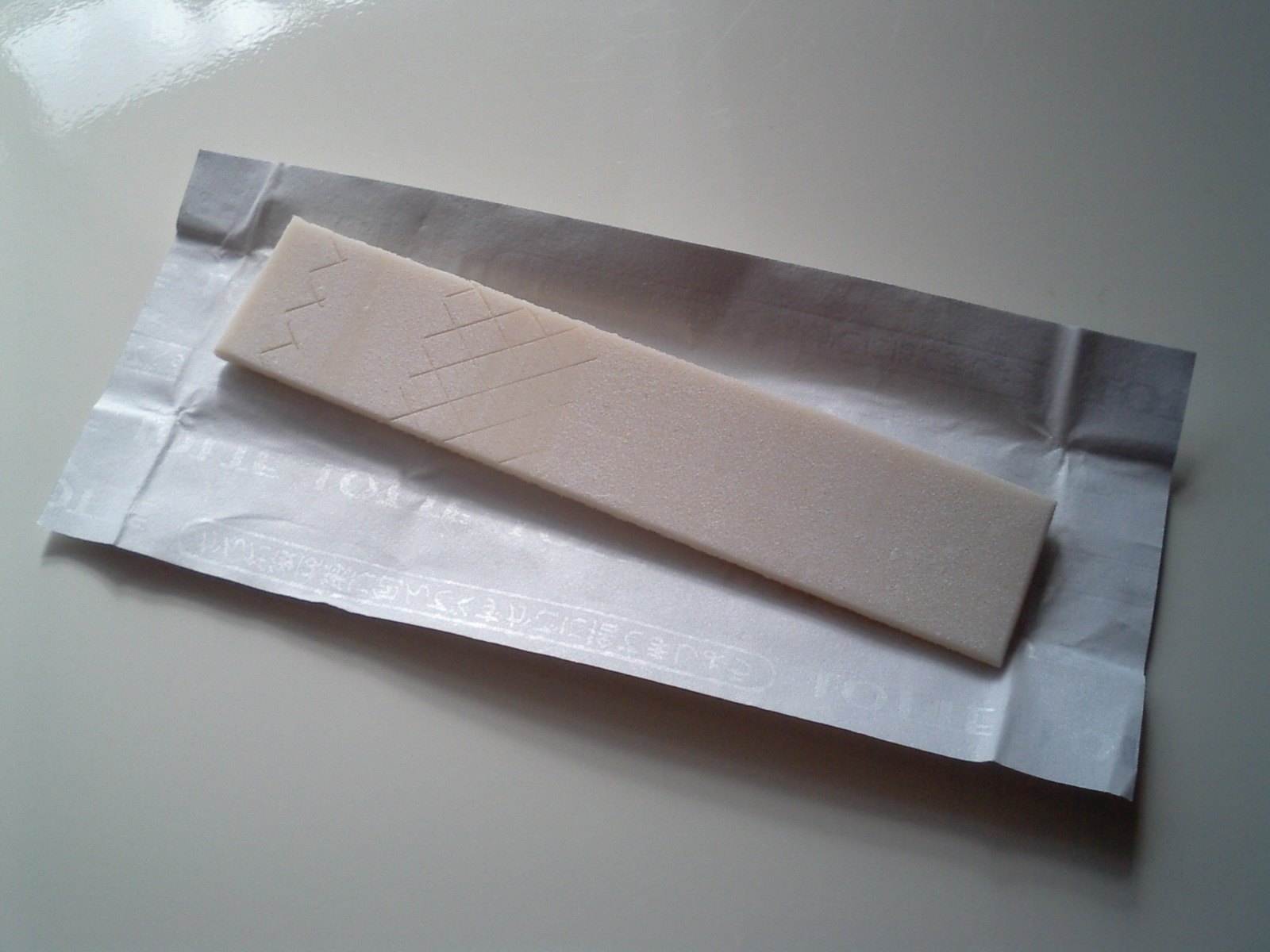
It Is Illegal To Own Or Sell Chewing Gum In Singapore

Since 2004, only chewing gum of therapeutic value is allowed into Singapore following the Singapore–United States Free Trade Agreement.

This law was created because people disposed of gum incorrectly by sticking it under places like chairs or tables. Chewing gum is banned in Singapore under the "Regulation of Imports and Exports (Chewing Gum) Regulations." Except for chewing gum of therapeutic value, the "importing" of chewing gum into Singapore is banned. Gum can be bought from a doctor, but must be prescribed.

According to the set of Regulations, "importing" means to "bring or cause to be brought into Singapore by land, water or air from any place which is outside Singapore ..." any goods, even if they are not for purposes of trade. The set of Regulations also does not make any provisions for personal use of quantities to be brought into Singapore.

Sunday, May 26, 2013

Most Lipsticks Contain Fish Scales

In order to give some lipsticks (as well as nail polish, some paints and some ceramics) a nice "shimmery" effect an ingredient called pearl essence (also known as "pearlesence") is added to them.

Pearl essence is the silvery stuff found in fish scales and is harvested primarily as a by-product of Herring fisheries.

Saturday, May 25, 2013

In India It Is Legal To Marry a Dog

In India it is legal to marry a dog. Famous examples are:

  • June 2003 – A nine year old Indian girl of the Santal (or 'Santhal') tribe of Khanyhan, near Calcutta was formally married to a dog, in order to ward off a bad omen. The wedding was attended by more than one hundred guests, who danced to the beating of drums and drank home-made liquor. The girl told Western press, "I have no regret in marrying the dog Bacchan. I am fond of the dog who moves around our locality (translation [sic])" and tribal elders added she was free to remarry a human in future as an adult.

  • November 2007 – A man in southern India married a female dog in a traditional Hindu ceremony as an attempt to atone for stoning two other dogs to death – an act he believes cursed him. Selvakumar, 33, told the paper he had been suffering since he stoned two dogs to death and hung their bodies from a tree 15 years prior.

  • February 2009 – An infant boy was married off to his neighbors' dog in eastern India by villagers who said it will stop the groom from being killed by wild animals. The boy will still be able to marry a human bride in the future without filing for divorce.

  •  

    Friday, May 24, 2013

    Labor Pain Simulator

    The video, which has been shared on YouTube and watched more than four million times, sees Dennis Storm and Valerio Zeno, hosts of the Dutch TV show Guinea Pigs, crying in pain during the fake labour.

    Women have long bemoaned the fact that men could never understand the agony that they go through during giving birth – and despite its obvious imperfections, the electro-simulation seems to be able to give the men a little bit of insight.

    Both of them had four electrodes strapped to their abdomens and during a two hour time period were administered by two women electrical shocks in order to create the same types of pain as pregnant women feel during contractions.

    The men seem to take it in their stride at first – laughing and joking about. However, their laughter soon turns to tears – as they are comforted by the women carrying out the experiment and advised to ‘breathe’ and ‘focus on something else in the room’.

    Source: The  Telegraph

    Thursday, May 23, 2013

    Drinking Too Much Water Can Kill You

    Too much water can lead to a condition known as water intoxication and to a related problem resulting from the dilution of sodium in the body, hyponatremia. Water intoxication is most commonly seen in infants under six months of age and sometimes in athletes. A baby can get water intoxication as a result of drinking several bottles of water a day or from drinking infant formula that has been diluted too much. Athletes can also suffer from water intoxication. Athletes sweat heavily, losing both water and electrolytes. Water intoxication and hyponatremia result when a dehydrated person drinks too much water without the accompanying electrolytes.

    What Happens During Water Intoxication? When too much water enters the body's cells, the tissues swell with the excess fluid. Your cells maintain a specific concentration gradient, so excess water outside the cells (the serum) draws sodium from within the cells out into the serum in an attempt to re-establish the necessary concentration. As more water accumulates, the serum sodium concentration drops -- a condition known as hyponatremia. The other way cells try to regain the electrolyte balance is for water outside the cells to rush into the cells via osmosis. The movement of water across a semipermeable membrane from higher to lower concentration is called osmosis. Although electrolytes are more concentrated inside the cells than outside, the water outside the cells is 'more concentrated' or 'less dilute' since it contains fewer electrolytes. Both electrolytes and water move across the cell membrane in an effort to balance concentration. Theoretically, cells could swell to the point of bursting.  From the cell's point of view, water intoxication produces the same effects as would result from drowning in fresh water. Electrolyte imbalance and tissue swelling can cause an irregular heartbeat, allow fluid to enter the lungs, and may cause fluttering eyelids. Swelling puts pressure on the brain and nerves, which can cause behaviors resembling alcohol intoxication. Swelling of brain tissues can cause seizures, coma and ultimately death unless water intake is restricted and a hypertonic saline (salt) solution is administered. If treatment is given before tissue swelling causes too much cellular damage, then a complete recovery can be expected within a few days.  It's Not How Much You Drink, It's How Fast You Drink It!
    The kidneys of a healthy adult can process fifteen liters of water a day! You are unlikely to suffer from water intoxication, even if you drink a lot of water, as long as you drink over time as opposed to intaking an enormous volume at one time. As a general guideline, most adults need about three quarts of fluid each day. Much of that water comes from food, so 8-12 eight ounce glasses a day is a common recommended intake. You may need more water if the weather is very warm or very dry, if you are exercising, or if you are taking certain medications. The bottom line is this: it's possible to drink too much water, but unless you are running a marathon or an infant, water intoxication is a very uncommon condition.

    Source: about.com

    Wednesday, May 22, 2013

    Peanut Is An Ingredient For Dynamite

    George Washington Carver, the scientist and inventor dubbed "The black Leonardo da Vinci" by Time Magazine, spent his life researching alternative uses for peanuts.

    Among his hundreds of discoveries, he used peanuts to create paints, tuberculosis medicine, and nitroglycerin, the active ingredient in dynamite.

    Dynamite is a popular explosive, invented by Alfred Nobel, the namesake of the Nobel Peace Prize.

    Dynamite consists of 3 parts nitroglycerin and one part stabilizer. Nitroglycerin is a highly volatile explosive that can explode when shaken.

    To make dynamite, you mix nitroglycerin with a stabilizer (diatomaceous earth or just regular sawdust) to make it less sensitive, so you don't blow yourself up when using it.


    Source: omg-facts.com

    Tuesday, May 21, 2013

    The Unicorn Is The National Animal Of Scotland

    The unicorn is one of the two national animals, along with the Red Lion. The unicorn, despite being fictional, was already being shown as a symbol of the Scottish royal family in the 1400s.

    Examples of early royal connections are a shield carved into Rothesay Castle and some coins dating back to as early as 1466.

    Scottish mythology, as well as having magical tales of unicorns, is full of mysterious and fascinating creatures.

    One you may have heard of is the Loch Ness monster. Since the 5th century the story of a giant ‘water beast’ that has dragged many a fisherman to their death.

    Lesser known folklore includes the tale of Tam O'Shanter, which was immortalised by poet Robert Burns in the 1800s.

    The story tells of witches and ghosts and perfectly captures the essence of being curled up around the fire on a windy night in the highlands, listening to a scary story.


    Monday, May 20, 2013

    Chewing Gum Improves A Person's Mood

    Chewing gum produces a number of benefits that are generally observed and not context-dependent.

    Chewing gum was associated with greater alertness and a more positive mood.

    Reaction times were quicker in the gum condition, and this effect became bigger as the task became more difficult.

    Chewing gum also improved selective and sustained attention.

    Heart rate and cortisol levels were higher when chewing which confirms the alerting effect of chewing gum.

    Sunday, May 19, 2013

    Bon Jovi Pay What You Can Restaurant

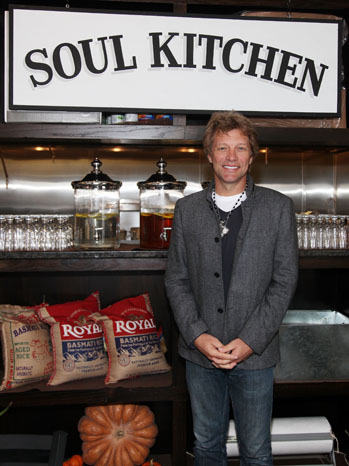
    Jon Bon Jovi is the lead singer of the band Bon Jovi. The band has had crazy amounts of success and their songs have been sung in karaoke bars across the world. As it turns out, Jon Bon Jovi is an extremely charitable man and is helping people live on a prayer.

    Jon Bon Jovi started the JBJ Soul Foundation charity, which runs the non profit restaurant, Soul Kitchen. The menu for this restaurant has no prices, because the customers only have to pay if they want to! If they choose to pay, they only have to pay $10. If they pay anything more, they are paying for a discount on someone else’s meal!

    Jon Bon Jovi says he understands that money is extremely tight for most families, and that there are too many people in the world that are going hungry, so he got the idea to open this restaurant! The rules are if you don’t pay you can volunteer to work at the restaurant until your meal is paid for!

    Source: omg-facts.com

    Saturday, May 18, 2013

    Coca-cola Only Sold 25 Bottles In Their First Year Of Business


    Coca-Cola began it's existance in a three-legged brass pot in the backyard of John S. Pemberton on May 8, 1886. 

    Pemberton was a pharmacist trying to create a new headache tonic.

    Pemberton took his creation to the now famous Jacob's Pharmacy, about 2 blocks from his home.

    There the syrup was mixed with cold tap water and sold to ailing customers for 5 cents.

    As the story goes, a customer in great pain came in and ordered the syrup and the soda jerk accidentally mixed it with carbonated water instead of regular tap water.

    The customer loved the new drink, declaring it "Delicious and Refreshing!"

    Frank Robinson, Pemberton's partner and bookkeeper, suggested the name "Coca-Cola", taking each part of the name from a key ingredient in the product and proclaiming that the two C's would look good in advertising.  Mr. Robinson penned "Coca-Cola" in the unique flowing script that is now famous worldwide!  In 1886, sales of Coca-Cola averaged 9 drinks per day. That first year, Pemberton sold only 25 gallons of syrup. For his efforts, Pemberton grossed $50.00 and spent $73.96 on advertising!
    As John Pemberton's health grew worse, he sold the company off. Asa Candler took sole ownership of the company by 1891 for a mere $2,300.00!!! (that included all rights, including his initial investment!)

    Today, Coca-Cola is available in nearly 200 countries around the globe and its trademark is written in approximately 80 languages! It is one of the most recognizable logos in the world!

    Source: angelfire.com

    Friday, May 17, 2013

    Penguins Can Get Depressed

    Penguins have been known to become depressed and when that happens, they march away from their groups to die.

    Thursday, May 16, 2013

    Real Life Giant LEGO Bridge

    Before giant Lego trees and flowers popped up in the Australian Outback, a honking huge Lego bridge made an appearance in Germany.

    Late last year, street artist Megx pulled out the primary colors to transform the underside of a bridge into an optical illusion.

    Clever use of color and shading makes the bridge in Wuppertal look like it's built from an interlocking set of massive Lego bricks.

    It took about a month for the mondo makeover and required the use of a lift to elevate the artist up to working height.

    The result is pretty stunning, judging by the photos.