Showing posts with label Science. Show all posts

Monday, June 3, 2013

This Is The Tallest Man Ever

Robert Pershing Wadlow (February 22, 1918 – July 15, 1940) is the tallest person in history for whom there is irrefutable evidence. Wadlow is sometimes known as the Alton Giant or Giant of Illinois because he was born and grew up in Alton, Illinois.

Wadlow reached 8 ft 11.1 in (2.72 m) in height and weighed 439 lb (199 kg) at his death at age 22. His great size and his continued growth in adulthood were due to hyperplasia of his pituitary gland, which results in an abnormally high level of human growth hormone. He showed no indication of an end to his growth even at the time of his death.

Saturday, June 1, 2013

Water Flow Can Be Used To Cut Metal

A waterjet is a tool used in machine shops to cut metal parts with a (very) high-pressure stream of water. As amazing as it sounds, if you get water flowing fast enough it can actually cut metal.

Think of a waterjet as something with about 30 times the pressure of the power washer wand at your local car wash. Power washing at car washes is an everyday example of a dirt film being "cut" off the body, wheels and tires of an automobile.

The key to cutting metal with water is to keep the spray coherent. Waterjets are able to cut because the spray is channeled through a very narrow jeweled nozzle at a very high pressure to keep the spray coherent. Unlike metal cutters, a waterjet never gets dull and it cannot overheat.

Low pressure waterjets were first used for mining gold in California in 1852. Steam and hot water jets were used in the early 1900s for cleaning. High pressure waterjets were used for mining in the 1960s, and about 10 years ago industry began using waterjets for cutting. Abrasive water jets (abrasivejets) were first used in industry in about 1980.

In the past, only one piece of metal could be cut at a time with a saw or other metal cutting mechanical process. It was time intensive and expensive. Computer-controlled waterjet and abrasivejet cutting are used today in industry to cut many soft and hard materials. The plain water-abrasive mixture leaves the nozzle at more than 900 mph. The latest machines can cut to within two thousandths of an inch, and have jet speeds around Mach 3.

Waterjets can cut:
  • Marble
  • Granite
  • Stone
  • Metal
  • Plastic
  • Wood
  • Stainless steel
A water jet can cut a "sandwich" of different materials up to four inches thick. This odorless, dust-free and relatively heat-free process can also cut something as thin as five thousandths of an inch.

The tiny jet stream permits the first cut to also be the final finished surface. This single cutting process saves material costs and machining costs. For example, the engineer merely gives a gear drawing to the cutting shop via a diskette or e-mail and gets the finished gear back.

Waterjets cut softer materials, while abrasive jets are used for harder materials. The actual cutting is often done under water to reduce splash and noise. Faster feed rates are used to prevent the jet from cutting all the way through.

The water pressure is typically between 20,000 and 55,000 pounds per square inch (PSI). The water is forced through a 0.010" to 0.015" in diameter orifice (hole) in a jewel.

A waterjet can remove the bark from a tree at a distance of 40 feet if one alters the chemistry of plain water by adding SUPER-WATER®, available from Berkeley Chemical Research. The SUPER-WATER® is a soluble polymeric chemical that acts like a series of molecular spinal columns or concrete reinforcement bars that tie the individual water molecules together in a more structured way to form a coherent jet. Imagine the potential for cutting down roadside weeds.

Source: HowStuffWorks

Wednesday, May 29, 2013

A Man Who Donated Blood Over 1000 Times

James Harrison, OAM, also known as the Man with the golden arm, is a blood plasma donor from Australia. His over 1000 donations throughout his lifetime have saved over two million unborn babies from Rhesus disease.

James Harrison was born in 1936. At the age of 13, he underwent a major chest surgery to extract a lung with metastasised pneumonia, and required 12 litres of blood. After surgery, he was in the hospital for three months. Realising the blood had saved his life, he made a pledge to start donating blood as soon as he turned eighteen, the then required age.

Mr. Harrison started donating in 1954 and after the first few donations it was discovered that his blood contained an abnormally strong and persistent antibody called Rho(D) Immune Globulin. Rho(D) IG is given to Rh(D) negative mothers of unknown or Rh(D) positive babies during and after pregnancy which prevents her from creating antibodies to the blood of a Rh(D) positive child. This antigen sensitization and subsequent incompatibility phenomenon is called Rhesus disease, a form of the hemolytic disease of the newborn (HDN).

Through the donations of his plasma, Mr. Harrison helped prevent thousands of born and unborn children from dying of HDN. This uniqueness was considered so important, that his life was insured for one million dollars after this discovery and the following research based on his donations created the commercial Anti-D immune globulin commonly known as RhoGAM. His blood plasma derivatives has since been given as treatment to one in ten pregnant women whose blood is not compatible with that of their children.

As blood plasma, in contrast to blood, can be donated as often as every 2–3 weeks, he was able to reach his 1000th donation in May 2011. This results in an average of one donation every three weeks during 57 years. Commenting his then record number:
I could say it's the only record that I hope is broken, because if they do, they have donated a thousand donations.
—James Harrison.
His donations were estimated to have helped to save over 2.4 million babies with pregnant women being treated with his antibodies, including his own daughter Tracey.

Harrison has received an Order of Australia medal (OAM). He was nominated for Australian of the Year, though he did not win. In 2011, he was nominated in the New South Wales Local Hero division of the Australian of the Year awards.


Sunday, May 26, 2013

Most Lipsticks Contain Fish Scales

In order to give some lipsticks (as well as nail polish, some paints and some ceramics) a nice "shimmery" effect an ingredient called pearl essence (also known as "pearlesence") is added to them.

Pearl essence is the silvery stuff found in fish scales and is harvested primarily as a by-product of Herring fisheries.

Wednesday, May 22, 2013

Peanut Is An Ingredient For Dynamite

George Washington Carver, the scientist and inventor dubbed "The black Leonardo da Vinci" by Time Magazine, spent his life researching alternative uses for peanuts.

Among his hundreds of discoveries, he used peanuts to create paints, tuberculosis medicine, and nitroglycerin, the active ingredient in dynamite.

Dynamite is a popular explosive, invented by Alfred Nobel, the namesake of the Nobel Peace Prize.

Dynamite consists of 3 parts nitroglycerin and one part stabilizer. Nitroglycerin is a highly volatile explosive that can explode when shaken.

To make dynamite, you mix nitroglycerin with a stabilizer (diatomaceous earth or just regular sawdust) to make it less sensitive, so you don't blow yourself up when using it.


Source: omg-facts.com

Monday, May 20, 2013

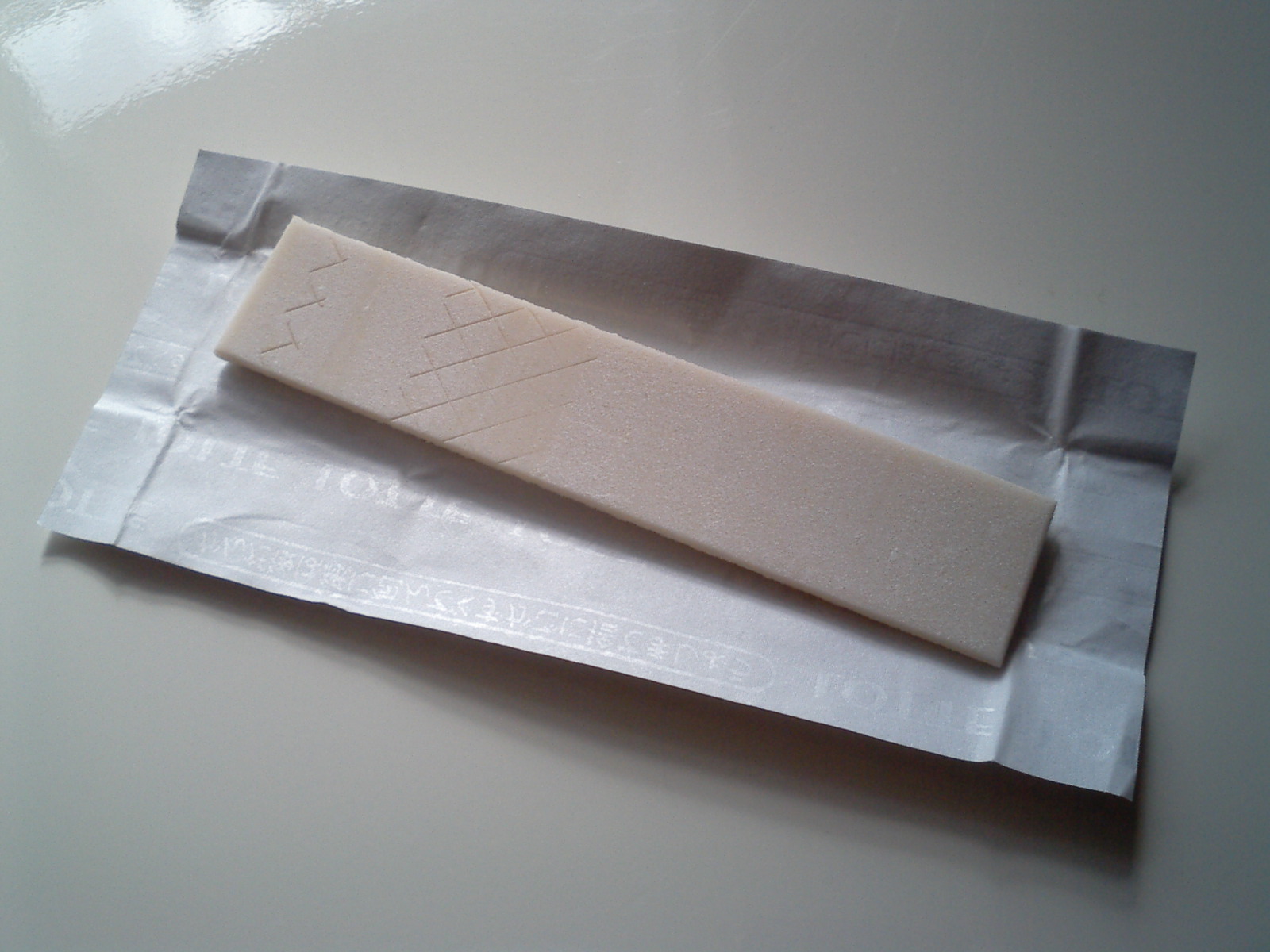
Chewing Gum Improves A Person's Mood

Chewing gum produces a number of benefits that are generally observed and not context-dependent.

Chewing gum was associated with greater alertness and a more positive mood.

Reaction times were quicker in the gum condition, and this effect became bigger as the task became more difficult.

Chewing gum also improved selective and sustained attention.

Heart rate and cortisol levels were higher when chewing which confirms the alerting effect of chewing gum.

Friday, May 17, 2013

Penguins Can Get Depressed

Penguins have been known to become depressed and when that happens, they march away from their groups to die.

Wednesday, May 15, 2013

The Most Poisonous Animal In The Planet


There are two animals which could top the list of the most poisonous animals in the world.

The King Cobra is considered the world's most venomous snake, growing up to 5.6 m (18.5 ft) in length.

It is also called Ophiophagus which also means "snake-eater”, because it eats other snakes. One single bite of this deadly snake can easily kill a human.

Tuesday, May 14, 2013

The Average Chocolate Bar Has 8 Insect Legs In It!

After cocoa beans are harvested they need to be fermented.

This means that they are put in an earthen pit near where they are harvested and covered with leaves.

 In the hot sun they ferment (rot) and then can be shoveled out as mature cocoa beans.

Monday, May 13, 2013

An Average Human Has Between 85,000 And 150,000 Hair On Their Head

Human beings have between 85,000 and 150,000 hairs on their head.

People with blonde hair have the most, while redheads have the least.

Each strand is about 0.08mm thick and grows between 0.1mm and 0.2mm every day, equating to about 30m in hair length and 6cm³ in hair volume.

A hair strand is 90% keratin and growth is initiated by its root, which then continues to produce new material for two to six years without interruption.

Sunday, May 12, 2013

LifeGem The Company That Turns Human Ashes Into Diamonds

LifeGem is the world's first company offering to synthesize diamonds from the carbonized remains of humans or their pets – resulting in what is known as memorial diamonds.

Established as the International Research & Recovery Corporation, LifeGem was the first U.S. company to develop a way to extract carbon from remains.

According to Dean VandenBiesen, speaking on the Stan and Terry show May 7, 2007, the company is able to create a diamond from a lock of hair.

Saturday, May 11, 2013

Pink Lake In Senegal

Lake Retba or Lac Rose lies north of the Cap Vert peninsula of Senegal, north east of Dakar.

It is so named for its pink waters, caused by Dunaliella salina algae in the water that produce a red pigment that uses sunlight to create more energy, turning the waters pink.

Friday, May 10, 2013

55 Cancri E: The Planet Made Out Of Diamond

55 Cancri e is an extrasolar planet orbiting the Sun-like star 55 Cancri A.

Its mass is about 7.8 Earth masses and its diameter is about twice that of Earth's, thus classifying it as the first Super-Earth discovered around a main sequence star, predating Gliese 876 d by a year.

Wednesday, May 8, 2013

A Cockroach Can Live Without Its Head

Cockroaches live in a wide range of environments around the world. Pest species adapt readily to a variety of environments, but prefer warm conditions found within buildings.

Many tropical species prefer even warmer environments and do not fare well in the average household.

Cockroaches, like all insects, breathe through a system of tubes called tracheae.

Tuesday, May 7, 2013

Whale's Vomit Is As Expensive As Gold

Ambergris  is a solid, waxy, flammable substance of a dull grey or blackish color produced in the digestive system of sperm whales.

Freshly produced ambergris has a marine, fecal odor.

However, as it ages, it acquires a sweet, earthy scent commonly likened to the fragrance of rubbing alcohol without the vaporous chemical astringency.

Monday, May 6, 2013

Pink Lake In Australia

Pink Lake is a salt lake in the Goldfields-Esperance region of Western Australia. It lies about 3 kilometres (2 mi) west of Esperance and is bounded to the East by the South Coast Highway.

The lake is not always pink in colour but the distinctive colour of the water changes as a result of green alga Dunaliella salina, halobacterium Halobacteria cutirubrum, and/or high concentration of brine prawn.

Sunday, May 5, 2013

Astronomers Find Most Earth-like Planets Yet

Using a potent NASA space telescope to scan the skies for planets like ours where life might exist, astronomers said they have found the most Earth-like candidates yet.

Two of the five planets orbiting a sun-like star called Kepler-62 are squarely in what astronomers call the habitable zone -- not too hot, not too cold and possibly bearing water, researchers said in the journal Science.

Saturday, May 4, 2013

Artist Suspends Real Clouds In The Middle Of The Room

That's an actual cloud hovering inside an actual room.

Artist Berndnaut Smilde merges art and science to create small man-made clouds that exist indoors.

Smilde uses a fog machine to make the actual clouds, but also carefully regulates the humidity and temperature.

Friday, May 3, 2013

How a Movie Changed One Man’s Vision Forever

Bruce Bridgeman lived with a flat view of the world, until a trip to the cinema unexpectedly rewired his brain to see the world in 3D.

The question is how it happened.

Good movies change people’s view of the world all the time, but how many can say a movie has fundamentally altered their vision forever? One person who can is Bruce Bridgeman. In terms of how he sees the world, there is life before Hugo, and life after Hugo.

Wednesday, May 1, 2013

Money Is Not Made Out Of Paper

Paper money is made mostly from cotton.

Paper money is divided into 75% cotton and 25% linen to make it last longer.