 A toothpick is the object most often choked on by Americans.
Showing posts with label Health. Show all posts
Showing posts with label Health. Show all posts
Thursday, May 30, 2013

Wednesday, May 29, 2013
A Man Who Donated Blood Over 1000 Times

James Harrison was born in 1936. At the age of 13, he underwent a major chest surgery to extract a lung with metastasised pneumonia, and required 12 litres of blood. After surgery, he was in the hospital for three months. Realising the blood had saved his life, he made a pledge to start donating blood as soon as he turned eighteen, the then required age.
Mr. Harrison started donating in 1954 and after the first few donations it was discovered that his blood contained an abnormally strong and persistent antibody called Rho(D) Immune Globulin. Rho(D) IG is given to Rh(D) negative mothers of unknown or Rh(D) positive babies during and after pregnancy which prevents her from creating antibodies to the blood of a Rh(D) positive child. This antigen sensitization and subsequent incompatibility phenomenon is called Rhesus disease, a form of the hemolytic disease of the newborn (HDN).
Through the donations of his plasma, Mr. Harrison helped prevent thousands of born and unborn children from dying of HDN. This uniqueness was considered so important, that his life was insured for one million dollars after this discovery and the following research based on his donations created the commercial Anti-D immune globulin commonly known as RhoGAM. His blood plasma derivatives has since been given as treatment to one in ten pregnant women whose blood is not compatible with that of their children.
As blood plasma, in contrast to blood, can be donated as often as every 2–3 weeks, he was able to reach his 1000th donation in May 2011. This results in an average of one donation every three weeks during 57 years. Commenting his then record number:
His donations were estimated to have helped to save over 2.4 million babies with pregnant women being treated with his antibodies, including his own daughter Tracey.I could say it's the only record that I hope is broken, because if they do, they have donated a thousand donations.—James Harrison.
Harrison has received an Order of Australia medal (OAM). He was nominated for Australian of the Year, though he did not win. In 2011, he was nominated in the New South Wales Local Hero division of the Australian of the Year awards.
Thursday, May 23, 2013
Drinking Too Much Water Can Kill You

What Happens During Water Intoxication? When too much water enters the body's cells, the tissues swell with the excess fluid. Your cells maintain a specific concentration gradient, so excess water outside the cells (the serum) draws sodium from within the cells out into the serum in an attempt to re-establish the necessary concentration. As more water accumulates, the serum sodium concentration drops -- a condition known as hyponatremia. The other way cells try to regain the electrolyte balance is for water outside the cells to rush into the cells via osmosis. The movement of water across a semipermeable membrane from higher to lower concentration is called osmosis. Although electrolytes are more concentrated inside the cells than outside, the water outside the cells is 'more concentrated' or 'less dilute' since it contains fewer electrolytes. Both electrolytes and water move across the cell membrane in an effort to balance concentration. Theoretically, cells could swell to the point of bursting. From the cell's point of view, water intoxication produces the same effects as would result from drowning in fresh water. Electrolyte imbalance and tissue swelling can cause an irregular heartbeat, allow fluid to enter the lungs, and may cause fluttering eyelids. Swelling puts pressure on the brain and nerves, which can cause behaviors resembling alcohol intoxication. Swelling of brain tissues can cause seizures, coma and ultimately death unless water intake is restricted and a hypertonic saline (salt) solution is administered. If treatment is given before tissue swelling causes too much cellular damage, then a complete recovery can be expected within a few days. It's Not How Much You Drink, It's How Fast You Drink It!
The kidneys of a healthy adult can process fifteen liters of water a day! You are unlikely to suffer from water intoxication, even if you drink a lot of water, as long as you drink over time as opposed to intaking an enormous volume at one time. As a general guideline, most adults need about three quarts of fluid each day. Much of that water comes from food, so 8-12 eight ounce glasses a day is a common recommended intake. You may need more water if the weather is very warm or very dry, if you are exercising, or if you are taking certain medications. The bottom line is this: it's possible to drink too much water, but unless you are running a marathon or an infant, water intoxication is a very uncommon condition.
Source: about.com
Monday, May 20, 2013
Chewing Gum Improves A Person's Mood
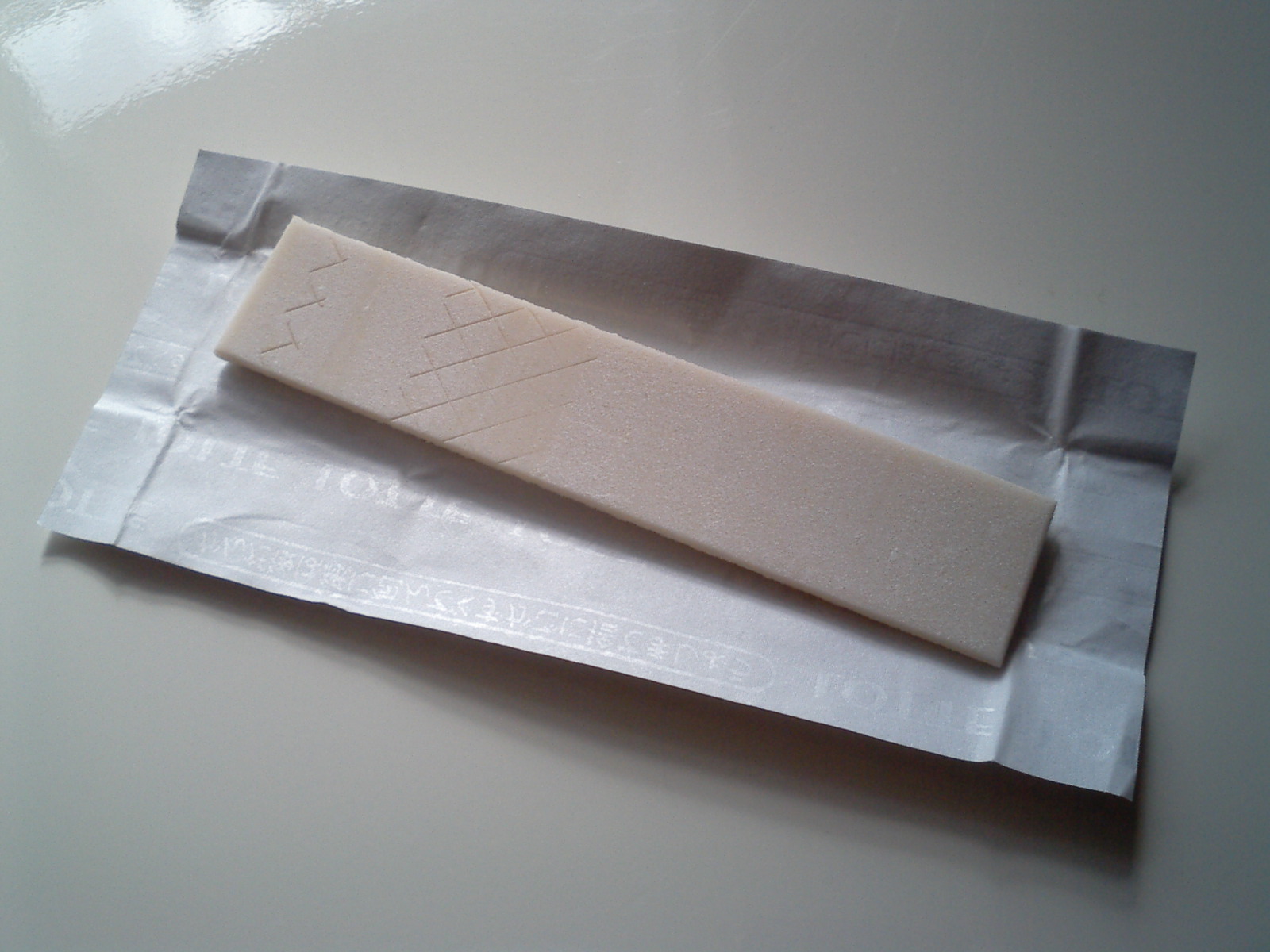
Chewing gum was associated with greater alertness and a more positive mood.
Reaction times were quicker in the gum condition, and this effect became bigger as the task became more difficult.
Chewing gum also improved selective and sustained attention.
Heart rate and cortisol levels were higher when chewing which confirms the alerting effect of chewing gum.
Tuesday, May 14, 2013
The Average Chocolate Bar Has 8 Insect Legs In It!

This means that they are put in an earthen pit near where they are harvested and covered with leaves.
In the hot sun they ferment (rot) and then can be shoveled out as mature cocoa beans.
Monday, May 13, 2013
An Average Human Has Between 85,000 And 150,000 Hair On Their Head

People with blonde hair have the most, while redheads have the least.
Each strand is about 0.08mm thick and grows between 0.1mm and 0.2mm every day, equating to about 30m in hair length and 6cm³ in hair volume.
A hair strand is 90% keratin and growth is initiated by its root, which then continues to produce new material for two to six years without interruption.
Thursday, May 9, 2013
Hugging And Holding Hands Is Good For The Heart

What a lot of people don’t know is that it can actually physically protect the health of your heart and your ability to combat stress.
Researchers at the School of Medicine at the University of North Carolina-Chapel Hill have been studying the effects of hugging on people’s level of stress.
Friday, May 3, 2013
How a Movie Changed One Man’s Vision Forever

The question is how it happened.
Good movies change people’s view of the world all the time, but how many can say a movie has fundamentally altered their vision forever? One person who can is Bruce Bridgeman. In terms of how he sees the world, there is life before Hugo, and life after Hugo.
Tuesday, April 23, 2013
350 Million People Suffer From Facebook Addiction Disorder (F.A.D.)

Everyone from eager-to-fit-in tweens to educated business people to intrigued grandparents has joined the phenomenon, and unsurprisingly many teenagers have also caught Facebook fever.
And like with many of the latest attention-grabbing trends, some teenagers can go a little overboard when participating in them.
Subscribe to:
Posts (Atom)